Navigating the AI Revolution
A Brand Manager’s Journey
Over the past three years, I’ve immersed myself in experimenting with AI tools across branding, media production, and content creation. From building test websites to crafting reels, posts, and videos — I’ve used these tools regularly. This journey has revealed what many ignore: the core skill isn’t the tool, but how you communicate with it.
Prompting Is the New Skillset
For me, prompt-writing has become as essential as strategy or design. Giving instructions to an AI feels like directing an artist with words: you must carefully describe what you want painted. Often this requires long prompts, adjustments, and several rounds of refinement before you get a usable result. The process demands patience and dedication, it’s not instant magic, but a craft.
When AI Shines and Doesn’t
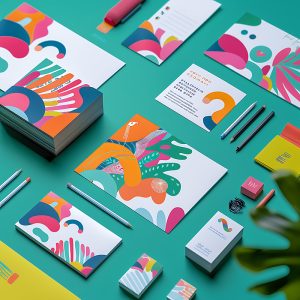
AI handles text and image generation brilliantly. For marketing basics like brochures, invitations, ads, social graphics, these tools now supply a significant boost in speed and creativity. But once you venture into more complex or layered productions (interactive websites, videos, brand-specific animations) things get trickier. Renderings may look stunning, yet often miss the subtle nuances of a brand’s voice or visual identity. In those cases, a human designer is still usually faster and more precise, as waiting for countless new renderings takes up a lot of time.
From Chaos to Consistency — Evolving AI Quality
In the early days, I struggled with consistency problems. Outputs varied drastically, even with very similar prompts. That instability was a real problem when you’re trying to build a coherent brand identity. In the last few months, however, many models and tools have improved. They’ve become more attuned to brand parameters and better at interpreting detailed instructions making consistent, high-quality output much more achievable.
Why AI Belongs in Branding’s Future
Just as architecture, engineering, and medicine have embraced AI to stay relevant, branding and media are going through the same transformation. AI has unlocking a new wave of possibilities. And not just automating repetitive tasks, but enabling more rapid experimentation and ideation. Individuals may try generic AI renderings themselves but it’s the specialists who know how to guide the AI that will create real value knowing the right professional “language”. With AI as a smart assistant, what matters most remains human: conception, direction, adaption and vision.
Conclusion
Watching new AI tools mushroom almost weekly, I’m excited by the renewed spark of innovation. It reminds me of early experiments in Photoshop or 3D graphics. Only now everything is faster, more powerful, more experimental. Many renderings will still feel rough or imperfect. Maybe only 10% are immediately usable but that’s part of the creative journey. AI isn’t a replacement for human creativity: it’s a new partner. The future belongs to those who embrace the change while others risk being left behind.
Helpful? Share it with your friends
About the author
Derek Durgaram is an entrepreneur with a background in business consultancy. He is the brains behind Green Media, a media production company based in Curacao. GreenLine Communication is a spin off of his company, a service that offers insights and project management within the digital media domain.